Every decision is a bet
We cannot directly observe the future. We construct representations of what might happen and decide whether to commit resources on the basis of them. Those resources may include money, time, attention, effort, opportunity, reputation, trust or safety. In this structural sense, every decision is a bet: a commitment of finite resources to one course of action under uncertainty. This does not mean that every decision is reckless or equivalent to gambling. It means that no decision comes with complete knowledge of its consequences.Risk belongs to a representation
Risk is not simply a property of an event. It depends upon what a person or organisation believes may happen, how likely they believe it to be, what consequences they represent, what they value and what resources they can afford to lose. The same possibility may therefore represent very different risks to different people. A $1,000 loss is not the same risk to everyone. A one per cent probability may be acceptable in one setting and intolerable in another. A delay may be insignificant to one person and critical to someone else. To understand a judgment about risk, we may need to ask: What unit was used to measure it? and: Risk relative to what objective, threshold or alternative?Uncertainty cannot always be removed
When uncertain, we can investigate further. But investigation also consumes resources and cannot continue indefinitely. Eventually, we must decide whether we know enough to: • act; • investigate further; • choose another option; • wait for more information; or • deliberately ignore the matter. Each choice preserves some possibilities and gives up others. Even waiting is a bet. It commits time and opportunity to the possibility that more useful information will emerge—or that delaying action will not make the situation worse.Risk through the NMF
Detection What possibility or departure from normal has entered attention? Many risks remain inactive because they are never noticed or represented. Others are familiar enough to be treated as background. Evaluation What might the signal mean? The person constructs possible explanations and futures. These representations may include what could be gained, lost, prevented or missed. Commitment Is the available representation good enough to justify the next step? Commitment does not require certainty. It requires crossing a threshold that is acceptable or defensible for the decision being made. Action What resources are being committed—and what alternatives are being abandoned? Acting, waiting, investigating and ignoring create different exposures to uncertainty. Learning What does the outcome justify changing? An outcome provides new information, but it does not reveal every future that might have followed from the decision. We observe what happened—not all the things that could have happened.Adapting as uncertainty becomes evidence
We cannot know in advance exactly what uncertainty will produce. But once we act, reality provides further signals. The result may match what we expected—or differ from it. If Plan A does not produce the expected result, that mismatch becomes new information. The receiver can then re-evaluate the situation and decide whether Plan B is now the next defensible bet. The process may repeat: act → compare expectation with outcome → detect a meaningful difference → re-evaluate → make the next commitment Effective action under uncertainty does not therefore depend upon predicting every development correctly. It may depend upon detecting quickly when the current representation is no longer adequate and adapting before the consequences become unmanageable.Adaptive lag
Adaptive lag is the delay between reality changing and the receiver detecting, representing and responding to that change. A receiver cannot remain one step ahead of uncertainty. That would require knowing what will happen next. What they may be able to do is avoid falling too far behind it. If the situation changes slowly enough—or the receiver adapts quickly enough—the position may remain manageable. If events develop faster than the receiver can detect, evaluate and act, the mismatch may escalate beyond their available cognitive or practical resources. • Managing uncertainty may therefore involve: • identifying the earliest signs that an assumption is failing; • comparing actual outcomes with expected outcomes; • preserving options and resources for another move; • favouring reversible actions when confidence is limited; • revising a representation without waiting for catastrophic proof; and • completing another DECAL sequence before the situation gets out of hand. Each new action remains a bet. The aim is not to eliminate uncertainty, but to remain sufficiently responsive as uncertainty becomes new evidence.Betting and insurance
Betting and insurance expose the same underlying structure from different directions. In a bet, someone accepts or creates exposure to uncertainty in pursuit of a possible gain. With insurance, someone accepts a certain, limited cost in order to reduce exposure to a possible larger loss. From the policyholder’s perspective, insurance exchanges an uncertain loss for a more predictable cost. From the insurer’s perspective, many uncertain individual events are priced and pooled into a more predictable aggregate. Both require judgments about possible futures, stakes, probabilities, consequences and acceptable thresholds. They also reveal an important distinction: A good outcome does not prove that the decision was good. A bad outcome does not prove that the decision was bad. A reckless bet may win. A well-judged bet may lose. An insurance policy may be a sound purchase even when no claim is ever made. The quality of the decision must be considered in relation to the representation available when the commitment was made — not merely the outcome that followed.Every option carries a stake
Sometimes a decision is framed as a choice between taking a risk and avoiding risk. But avoiding one risk may create another. Declining an opportunity protects what we already have but may sacrifice a possible gain. Investigating further may reduce uncertainty but consume time. Acting quickly may preserve an opportunity but increase the chance of error. Insurance may reduce financial exposure but impose a definite cost. The question is therefore rarely: Which option contains no risk? It is more often: Which uncertainties and possible consequences are we prepared to accept?Questions NMF can bring to risk
1. What future possibilities are being represented? 2. Which possibilities remain outside the representation? 3. What evidence shaped the estimate of likelihood? 4. What is being staked? 5. Who bears the possible cost? 6. Who receives the possible benefit? 7. What unit is being used to measure the risk? 8. What is the risk being compared with? 9. How much uncertainty is acceptable for this decision? 10. What would justify further investigation? 11. What would make waiting the better choice? 12. Is confidence based on evidence, familiarity or the absence of previous harm? 13. Will the outcome provide useful feedback? 14. How might the wrong lesson be learned? 15. What would provide the earliest indication that the current representation is failing? 16. How quickly would we need to detect and respond to that change? 17. What options and resources should be preserved for another move? 18. How much adaptive lag can the situation tolerate before it becomes unmanageable?A potential use — not a formula
The Normal-Model Framework does not calculate probabilities, determine acceptable risk or identify the correct decision. It does not replace statistical analysis, professional judgment, actuarial models or specialist risk-management methods. It offers a way to examine how uncertain possibilities enter attention, how they are represented, what resources are placed at stake, when commitment becomes acceptable and how outcomes shape future judgment. Its potential contribution lies in making the structure of the bet visible: • What do we think might happen? • What are we prepared to stake? • What would count as good enough reason to act? • And what, if anything, should the outcome teach us?
Risk &
Uncertainty

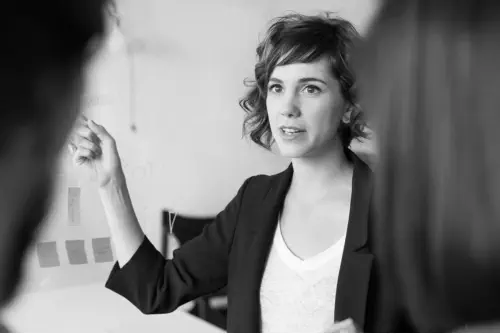
“Even waiting is a bet.”
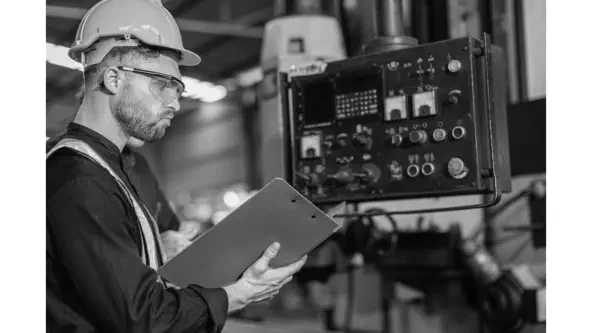
“We cannot know what will happen next.
Every choice puts something at stake.”


© Normal-Model Framework - 2026


Every decision is a bet
We cannot directly observe the future. We construct representations of what might happen and decide whether to commit resources on the basis of them. Those resources may include money, time, attention, effort, opportunity, reputation, trust or safety. In this structural sense, every decision is a bet: a commitment of finite resources to one course of action under uncertainty. This does not mean that every decision is reckless or equivalent to gambling. It means that no decision comes with complete knowledge of its consequences.Risk belongs to a representation
Risk is not simply a property of an event. It depends upon what a person or organisation believes may happen, how likely they believe it to be, what consequences they represent, what they value and what resources they can afford to lose. The same possibility may therefore represent very different risks to different people. A $1,000 loss is not the same risk to everyone. A one per cent probability may be acceptable in one setting and intolerable in another. A delay may be insignificant to one person and critical to someone else. To understand a judgment about risk, we may need to ask: What unit was used to measure it? and: Risk relative to what objective, threshold or alternative?Uncertainty cannot always be
removed
When uncertain, we can investigate further. But investigation also consumes resources and cannot continue indefinitely. Eventually, we must decide whether we know enough to: • act; • investigate further; • choose another option; • wait for more information; or • deliberately ignore the matter. Each choice preserves some possibilities and gives up others. Even waiting is a bet. It commits time and opportunity to the possibility that more useful information will emerge—or that delaying action will not make the situation worse.Risk through the NMF
Detection What possibility or departure from normal has entered attention? Many risks remain inactive because they are never noticed or represented. Others are familiar enough to be treated as background. Evaluation What might the signal mean? The person constructs possible explanations and futures. These representations may include what could be gained, lost, prevented or missed. Commitment Is the available representation good enough to justify the next step? Commitment does not require certainty. It requires crossing a threshold that is acceptable or defensible for the decision being made. Action What resources are being committed—and what alternatives are being abandoned? Acting, waiting, investigating and ignoring create different exposures to uncertainty. Learning What does the outcome justify changing? An outcome provides new information, but it does not reveal every future that might have followed from the decision. We observe what happened—not all the things that could have happened.Adapting as uncertainty becomes
evidence
We cannot know in advance exactly what uncertainty will produce. But once we act, reality provides further signals. The result may match what we expected—or differ from it. If Plan A does not produce the expected result, that mismatch becomes new information. The receiver can then re-evaluate the situation and decide whether Plan B is now the next defensible bet. The process may repeat: act → compare expectation with outcome → detect a meaningful difference → re-evaluate → make the next commitment Effective action under uncertainty does not therefore depend upon predicting every development correctly. It may depend upon detecting quickly when the current representation is no longer adequate and adapting before the consequences become unmanageable.Adaptive lag
Adaptive lag is the delay between reality changing and the receiver detecting, representing and responding to that change. A receiver cannot remain one step ahead of uncertainty. That would require knowing what will happen next. What they may be able to do is avoid falling too far behind it. If the situation changes slowly enough—or the receiver adapts quickly enough—the position may remain manageable. If events develop faster than the receiver can detect, evaluate and act, the mismatch may escalate beyond their available cognitive or practical resources. • Managing uncertainty may therefore involve: • identifying the earliest signs that an assumption is failing; • comparing actual outcomes with expected outcomes; • preserving options and resources for another move; • favouring reversible actions when confidence is limited; • revising a representation without waiting for catastrophic proof; and • completing another DECAL sequence before the situation gets out of hand. Each new action remains a bet. The aim is not to eliminate uncertainty, but to remain sufficiently responsive as uncertainty becomes new evidence.Betting and insurance
Betting and insurance expose the same underlying structure from different directions. In a bet, someone accepts or creates exposure to uncertainty in pursuit of a possible gain. With insurance, someone accepts a certain, limited cost in order to reduce exposure to a possible larger loss. From the policyholder’s perspective, insurance exchanges an uncertain loss for a more predictable cost. From the insurer’s perspective, many uncertain individual events are priced and pooled into a more predictable aggregate. Both require judgments about possible futures, stakes, probabilities, consequences and acceptable thresholds. They also reveal an important distinction: A good outcome does not prove that the decision was good. A bad outcome does not prove that the decision was bad. A reckless bet may win. A well-judged bet may lose. An insurance policy may be a sound purchase even when no claim is ever made. The quality of the decision must be considered in relation to the representation available when the commitment was made — not merely the outcome that followed.Every option carries a stake
Sometimes a decision is framed as a choice between taking a risk and avoiding risk. But avoiding one risk may create another. Declining an opportunity protects what we already have but may sacrifice a possible gain. Investigating further may reduce uncertainty but consume time. Acting quickly may preserve an opportunity but increase the chance of error. Insurance may reduce financial exposure but impose a definite cost. The question is therefore rarely: Which option contains no risk? It is more often: Which uncertainties and possible consequences are we prepared to accept?Questions NMF can bring to risk
1. What future possibilities are being represented? 2. Which possibilities remain outside the representation? 3. What evidence shaped the estimate of likelihood? 4. What is being staked? 5. Who bears the possible cost? 6. Who receives the possible benefit? 7. What unit is being used to measure the risk? 8. What is the risk being compared with? 9. How much uncertainty is acceptable for this decision? 10. What would justify further investigation? 11. What would make waiting the better choice? 12. Is confidence based on evidence, familiarity or the absence of previous harm? 13. Will the outcome provide useful feedback? 14. How might the wrong lesson be learned? 15. What would provide the earliest indication that the current representation is failing? 16. How quickly would we need to detect and respond to that change? 17. What options and resources should be preserved for another move? 18. How much adaptive lag can the situation tolerate before it becomes unmanageable?A potential use — not a formula
The Normal-Model Framework does not calculate probabilities, determine acceptable risk or identify the correct decision. It does not replace statistical analysis, professional judgment, actuarial models or specialist risk- management methods. It offers a way to examine how uncertain possibilities enter attention, how they are represented, what resources are placed at stake, when commitment becomes acceptable and how outcomes shape future judgment. Its potential contribution lies in making the structure of the bet visible: • What do we think might happen? • What are we prepared to stake? • What would count as good enough reason to act? • And what, if anything, should the outcome teach us?
Risk
& Uncertainty

USE IT. ADAPT IT. TEST IT.
“Even waiting is a bet.”
“We cannot know what will happen next.
Every choice puts something at stake.”


