Who (or what) decides what reaches our attention?
Artificial intelligence can search, classify, rank, summarise, recommend, predict and generate. In doing so, it helps determine: • which signals become visible; • which differences appear important; • which information is omitted; • which options are presented; • how a situation is represented; and • what a person is invited to consider next. AI does not merely provide more information. It increasingly participates in deciding which information receives human attention. The Normal-Model Framework may help us examine what happens when parts of noticing, evaluation and representation are delegated to machines.The bottleneck has moved
Human attention remains finite even when information becomes abundant. An AI system can process more material than a person could examine directly, but its output must still pass through the limited attention of a human receiver. This moves the bottleneck. The problem may no longer be finding information. It may be deciding which information should be selected, compressed, presented and trusted. A summary can make a complex subject manageable. But every summary also excludes detail. A recommendation can reduce the burden of choice. But it also changes which alternatives remain visible. The output becomes a representation of a larger reality—and the receiver may never see what was left out.AI and models of normal
Many AI systems identify patterns, classify inputs or generate outputs by drawing upon regularities in data. This can resemble parts of the NMF architecture. A system may distinguish what fits an established pattern from what appears unusual. It may route some inputs forward and allow others to pass without further attention. It may assign scores, rank possibilities or trigger actions when a threshold is crossed. These functional similarities may make NMF a useful descriptive lens. But an important boundary must be preserved: Functional resemblance does not establish mechanistic identity or phenomenological identity. A machine performing a function that resembles human recognition does not show that it performs that function through the same mechanism — or that it experiences noticing, uncertainty, confidence or concern. NMF does not quietly turn useful comparison into a claim about machine consciousness.Delegated noticing
AI can extend human resolution. It may detect faint patterns across thousands of images, transactions, measurements or documents. It can direct attention towards material that a person would not have had the time or capacity to inspect. But delegation also changes what the human sees. If a system determines which cases are unusual, the person may encounter only what the system has already selected. Anything classified as normal may remain invisible. That creates several questions: • What model of normal is the system using? • Which differences has it been designed or trained to detect? • What passes unnoticed? • How often are apparently normal cases examined? • Can the human recognise when the system itself has failed? The system may increase detection within its field of resolution while narrowing attention outside it.Constructed representations
An AI output is not reality. It is a representation produced from an input, a system’s design and training, its available context and the instructions it has received. The receiver then constructs another representation from that output. This creates a chain: reality or source material → machine representation → human representation At each stage, information may be selected, transformed, compressed, added, misunderstood or lost. A fluent answer can make that chain difficult to see. The output arrives as a finished statement, while uncertainty, missing context and alternative interpretations may remain hidden. The ease with which a representation can be read should not be confused with the quality of the evidence from which it was constructed.Fluency and confidence
People use signals to judge credibility. Clarity, confidence, detail and coherent language can all make a message easier to accept. AI can reproduce these signals without those signals necessarily being connected to accuracy. A system may produce a confident answer because confident language fits the requested form — not because the answer has crossed a justified evidential threshold. The receiver must therefore distinguish between: • confidence expressed in the output; • confidence warranted by the available evidence; and • confidence sufficient for the decision at hand. The appropriate threshold depends upon the stakes. An unverified suggestion for where to have dinner is not equivalent to advice used in medicine, finance, law or safety-critical operations.AI as sender, receiver and intermediary
AI can occupy several positions within a communication. It may receive a human instruction, transform existing material, generate a message or decide which message another person sees. A human sender may use AI to construct a signal. A human receiver may use AI to interpret one. An organisation may place AI between the two. This complicates the principle: Every communication has two subjects: the subject and the sender. Who should count as the sender of an AI-assisted message? The person who requested it? The organisation deploying the system? The people whose data influenced it? The system that generated the particular wording? The answer may differ according to the purpose of the question. Authorship, responsibility, provenance and causal contribution are not necessarily the same thing.Fake, real and synthetic
AI can generate images, voices, documents and messages that closely match familiar models of normal. This weakens many of the surface cues people have used to judge whether something is genuine. But AI-generated does not automatically mean fake, and synthetic does not automatically mean deceptive. An artificial image may be openly labelled and used honestly. A genuine photograph may be presented in a misleading context. A human-written message may be entirely false. The fundamental questions remain: • Is this what it claims to be? • Where did it come from? • Has it been altered? • Is relevant context missing? • What evidence supports its authenticity? • Is someone attempting to create a false representation? AI amplifies the challenge of authenticity, but it does not create it. As familiar appearance becomes easier to reproduce, provenance may become more important than appearance alone.Delegating judgment
Using AI is itself a judgment. The user must decide: • whether the task should be delegated; • what information to provide; • how much freedom the system should have; • whether the output is good enough; • what requires verification; and • who will remain responsible for the result. Delegation may conserve time and attention, but it can also reduce direct engagement with the underlying task. If people repeatedly accept outputs without reconstructing the reasoning or examining the evidence, their own models of normal may become less detailed. They may become better at operating the tool while becoming less able to detect when its output is wrong. Alternatively, AI may support learning by exposing people to alternatives, counterexamples and questions they would not otherwise have considered. The effect depends upon how the interaction is designed and how the output is used.AI through the NMF
Detection What did the system or human notice—and what remained outside attention? Was the person responding to the original situation or only to what the system selected? Evaluation How was the information interpreted, classified, ranked or transformed? What assumptions shaped the representation? Commitment Who decided that the output was good enough to use? What confidence threshold was applied, and was it appropriate for the stakes? Action Did the system recommend, assist, decide or act? What remained under meaningful human control? Learning What was written back after the outcome? Did the human update their judgment? Was the system changed? Did success create justified trust—or merely greater familiarity?Feedback and the new normal
AI-generated material can influence future human behaviour, decisions and data. Those changed behaviours may then become part of the material used to design or update later systems. This creates the possibility of a feedback loop: models shape outputs → outputs shape behaviour → behaviour becomes new evidence of normal The result may reinforce existing patterns, gradually narrow variation or make the consequences of earlier judgments appear natural and inevitable. A model of normal does not merely describe what exists when its outputs help shape what happens next.Responsibility
When AI contributes to a decision, responsibility can become difficult to locate. The developer may point to the user. The user may point to the system. The organisation may point to an established process. Each participant may have contributed to the outcome without any one participant representing the entire chain. NMF may help separate several questions: • Who noticed the relevant signal? • Who had access to the necessary information? • Who set the threshold? • Who authorised the action? • Who could have intervened? • Who received feedback from the outcome? • Who had the opportunity to learn? Distributing a process does not remove responsibility. But it may distribute different responsibilities across different stages.Questions NMF can bring to AI
1. What task is being delegated? 2. What model of normal is being applied? 3. Which signals reach human attention? 4. What information has been excluded or compressed? 5. What does the output represent—and what does it not represent? 6. Which differences can the system detect? 7. Which differences remain outside its resolution? 8. Does fluent presentation create unjustified confidence? 9. What evidence would justify accepting the output? 10. What level of verification is appropriate for the stakes? 11. Who set the threshold for action? 12. Can the human meaningfully disagree or intervene? 13. What will the outcome teach the user, organisation or system? 14. Could the interaction create the wrong kind of trust? 15. How might today’s outputs shape tomorrow’s model of normal? 16. Where does responsibility sit across the whole process?A potential use — not a theory of mind
The Normal-Model Framework is not a technical model of artificial intelligence. It does not explain how every AI system works, establish that machines think like humans or answer whether a machine possesses awareness, understanding or agency. It offers a way to examine what happens when humans and machines jointly detect, select, represent, judge, act and learn. Its potential contribution lies in making the allocation of attention and responsibility more visible: What is the machine being asked to notice? What is the human no longer seeing? Who decides that the representation is good enough? And who remains responsible for what happens next?
Artificial
Intelligence


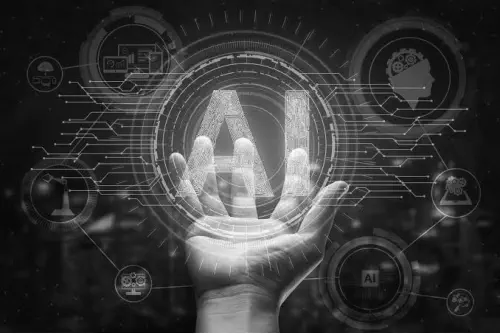
AI does not just answer questions.
It increasingly helps decide what reaches our attention.
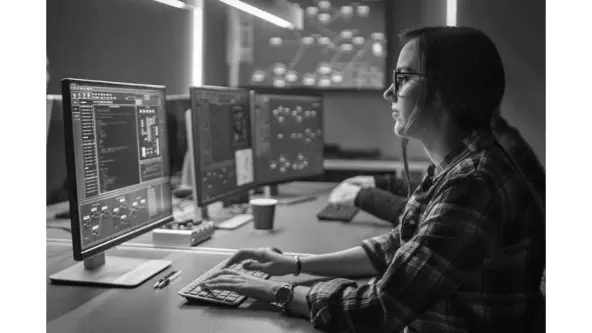
“What the system leaves out
may matter as much as what it shows us.”


© Normal-Model Framework - 2026


Who (or what) decides what
reaches our attention?
Artificial intelligence can search, classify, rank, summarise, recommend, predict and generate. In doing so, it helps determine: • which signals become visible; • which differences appear important; • which information is omitted; • which options are presented; • how a situation is represented; and • what a person is invited to consider next. AI does not merely provide more information. It increasingly participates in deciding which information receives human attention. The Normal-Model Framework may help us examine what happens when parts of noticing, evaluation and representation are delegated to machines.The bottleneck has moved
Human attention remains finite even when information becomes abundant. An AI system can process more material than a person could examine directly, but its output must still pass through the limited attention of a human receiver. This moves the bottleneck. The problem may no longer be finding information. It may be deciding which information should be selected, compressed, presented and trusted. A summary can make a complex subject manageable. But every summary also excludes detail. A recommendation can reduce the burden of choice. But it also changes which alternatives remain visible. The output becomes a representation of a larger reality—and the receiver may never see what was left out.AI and models of normal
Many AI systems identify patterns, classify inputs or generate outputs by drawing upon regularities in data. This can resemble parts of the NMF architecture. A system may distinguish what fits an established pattern from what appears unusual. It may route some inputs forward and allow others to pass without further attention. It may assign scores, rank possibilities or trigger actions when a threshold is crossed. These functional similarities may make NMF a useful descriptive lens. But an important boundary must be preserved: Functional resemblance does not establish mechanistic identity or phenomenological identity. A machine performing a function that resembles human recognition does not show that it performs that function through the same mechanism — or that it experiences noticing, uncertainty, confidence or concern. NMF does not quietly turn useful comparison into a claim about machine consciousness.Delegated noticing
AI can extend human resolution. It may detect faint patterns across thousands of images, transactions, measurements or documents. It can direct attention towards material that a person would not have had the time or capacity to inspect. But delegation also changes what the human sees. If a system determines which cases are unusual, the person may encounter only what the system has already selected. Anything classified as normal may remain invisible. That creates several questions: • What model of normal is the system using? • Which differences has it been designed or trained to detect? • What passes unnoticed? • How often are apparently normal cases examined? • Can the human recognise when the system itself has failed? The system may increase detection within its field of resolution while narrowing attention outside it.Constructed representations
An AI output is not reality. It is a representation produced from an input, a system’s design and training, its available context and the instructions it has received. The receiver then constructs another representation from that output. This creates a chain: reality or source material → machine representation → human representation At each stage, information may be selected, transformed, compressed, added, misunderstood or lost. A fluent answer can make that chain difficult to see. The output arrives as a finished statement, while uncertainty, missing context and alternative interpretations may remain hidden. The ease with which a representation can be read should not be confused with the quality of the evidence from which it was constructed.Fluency and confidence
People use signals to judge credibility. Clarity, confidence, detail and coherent language can all make a message easier to accept. AI can reproduce these signals without those signals necessarily being connected to accuracy. A system may produce a confident answer because confident language fits the requested form — not because the answer has crossed a justified evidential threshold. The receiver must therefore distinguish between: • confidence expressed in the output; • confidence warranted by the available evidence; and • confidence sufficient for the decision at hand. The appropriate threshold depends upon the stakes. An unverified suggestion for where to have dinner is not equivalent to advice used in medicine, finance, law or safety-critical operations.AI as sender, receiver and
intermediary
AI can occupy several positions within a communication. It may receive a human instruction, transform existing material, generate a message or decide which message another person sees. A human sender may use AI to construct a signal. A human receiver may use AI to interpret one. An organisation may place AI between the two. This complicates the principle: Every communication has two subjects: the subject and the sender. Who should count as the sender of an AI-assisted message? The person who requested it? The organisation deploying the system? The people whose data influenced it? The system that generated the particular wording? The answer may differ according to the purpose of the question. Authorship, responsibility, provenance and causal contribution are not necessarily the same thing.Fake, real and synthetic
AI can generate images, voices, documents and messages that closely match familiar models of normal. This weakens many of the surface cues people have used to judge whether something is genuine. But AI-generated does not automatically mean fake, and synthetic does not automatically mean deceptive. An artificial image may be openly labelled and used honestly. A genuine photograph may be presented in a misleading context. A human-written message may be entirely false. The fundamental questions remain: • Is this what it claims to be? • Where did it come from? • Has it been altered? • Is relevant context missing? • What evidence supports its authenticity? • Is someone attempting to create a false representation? AI amplifies the challenge of authenticity, but it does not create it. As familiar appearance becomes easier to reproduce, provenance may become more important than appearance alone.Delegating judgment
Using AI is itself a judgment. The user must decide: • whether the task should be delegated; • what information to provide; • how much freedom the system should have; • whether the output is good enough; • what requires verification; and • who will remain responsible for the result. Delegation may conserve time and attention, but it can also reduce direct engagement with the underlying task. If people repeatedly accept outputs without reconstructing the reasoning or examining the evidence, their own models of normal may become less detailed. They may become better at operating the tool while becoming less able to detect when its output is wrong. Alternatively, AI may support learning by exposing people to alternatives, counterexamples and questions they would not otherwise have considered. The effect depends upon how the interaction is designed and how the output is used.AI through the NMF
Detection What did the system or human notice—and what remained outside attention? Was the person responding to the original situation or only to what the system selected? Evaluation How was the information interpreted, classified, ranked or transformed? What assumptions shaped the representation? Commitment Who decided that the output was good enough to use? What confidence threshold was applied, and was it appropriate for the stakes? Action Did the system recommend, assist, decide or act? What remained under meaningful human control? Learning What was written back after the outcome? Did the human update their judgment? Was the system changed? Did success create justified trust—or merely greater familiarity?Feedback and the new normal
AI-generated material can influence future human behaviour, decisions and data. Those changed behaviours may then become part of the material used to design or update later systems. This creates the possibility of a feedback loop: models shape outputs → outputs shape behaviour → behaviour becomes new evidence of normal The result may reinforce existing patterns, gradually narrow variation or make the consequences of earlier judgments appear natural and inevitable. A model of normal does not merely describe what exists when its outputs help shape what happens next.Responsibility
When AI contributes to a decision, responsibility can become difficult to locate. The developer may point to the user. The user may point to the system. The organisation may point to an established process. Each participant may have contributed to the outcome without any one participant representing the entire chain. NMF may help separate several questions: • Who noticed the relevant signal? • Who had access to the necessary information? • Who set the threshold? • Who authorised the action? • Who could have intervened? • Who received feedback from the outcome? • Who had the opportunity to learn? Distributing a process does not remove responsibility. But it may distribute different responsibilities across different stages.Questions NMF can bring to AI
1. What task is being delegated? 2. What model of normal is being applied? 3. Which signals reach human attention? 4. What information has been excluded or compressed? 5. What does the output represent—and what does it not represent? 6. Which differences can the system detect? 7. Which differences remain outside its resolution? 8. Does fluent presentation create unjustified confidence? 9. What evidence would justify accepting the output? 10. What level of verification is appropriate for the stakes? 11. Who set the threshold for action? 12. Can the human meaningfully disagree or intervene? 13. What will the outcome teach the user, organisation or system? 14. Could the interaction create the wrong kind of trust? 15. How might today’s outputs shape tomorrow’s model of normal? 16. Where does responsibility sit across the whole process?A potential use — not a theory of
mind
The Normal-Model Framework is not a technical model of artificial intelligence. It does not explain how every AI system works, establish that machines think like humans or answer whether a machine possesses awareness, understanding or agency. It offers a way to examine what happens when humans and machines jointly detect, select, represent, judge, act and learn. Its potential contribution lies in making the allocation of attention and responsibility more visible: What is the machine being asked to notice? What is the human no longer seeing? Who decides that the representation is good enough? And who remains responsible for what happens next?
Artificial
Intelligence

USE IT. ADAPT IT. TEST IT.
AI does not just answer questions.
It increasingly helps decide what reaches our attention.
“What the system leaves out
may matter as much as what it shows us.”


