What if intelligence were measured partly by what a person can receive, not only by what they can
produce?
Most assessments of intelligence present a person with information and score the response. Did they produce the correct answer? How many problems did they solve? How quickly? How complex was their reasoning? These outputs matter. But they emerge from an earlier process that may remain largely unexamined: What information was the person able to receive from the situation in the first place? Two people can encounter the same physical stimulus without receiving the same informational input. One may detect a relationship, anomaly or implication that never enters the other person’s active representation. The Normal-Model Framework suggests that this difference may deserve to be treated as part of intelligence—and may provide a new way to measure the impact of training.The same stimulus is not the same input
An image, event, statement or problem may be physically available to several receivers. But availability does not guarantee reception. What becomes information depends partly upon the receiver: • what they already know; • what they expect; • what they can distinguish; • what they consider relevant; • what snags their attention; • what units they use; • what alternatives they can represent; and • what resources they are able or willing to allocate. The same stimulus may therefore produce different informational inputs. An expert may detect a faint but meaningful difference. A novice may not perceive it at all. Another receiver may notice many differences but be unable to distinguish signal from noise. Assessment that begins only with the final answer may miss these differences.Receptive intelligence
A possible working formulation is: Receptive intelligence is the capacity to detect, discriminate, integrate and learn from available information. This does not define intelligence as passive absorption. The receiver does not merely open a channel and allow information to enter. Reception may involve: • detecting differences; • separating signal from noise; • selecting what deserves attention; • constructing and comparing representations; • recognising missing information; • changing perspective or unit; • seeking further evidence; • calibrating confidence; and • revising a model when the evidence warrants it. The relevant question is not simply: How much input can a person receive? It is: How effectively can they convert available differences into useful information and appropriate model revision?The eye-test model
An eye test asks: Which is clearer: A, B, or are they the same? The person is not required to know which lens is objectively correct. They do not need to explain optics or produce a complex answer. Their simple response helps reveal something about the receiver: • whether they can detect a difference; • the direction in which clarity changes; • the point at which two states become indistinguishable; and • the resolution at which another adjustment no longer improves reception. The examiner changes one variable, compares the result and gradually approaches the receiver’s discrimination threshold. The output is not itself the capacity being measured. It is evidence about what the receiver can distinguish.From eyesight to information
A receptive-intelligence assessment might use a similar comparative structure. Instead of changing a lens, it could vary: • a detail in an image; • the strength of a signal; • the wording of an explanation; • the relevance of a piece of evidence; • the relationship between two events; • the reliability of a source; • the degree of uncertainty; • or the context surrounding a judgment. The receiver could be asked: • Same or different? • Different how? • Which is clearer? • Which better fits the evidence? • Which difference matters? • Has the new information improved the representation? • Is further investigation justified? • Are the two cases meaningfully different or merely superficially different? The difference could then be narrowed until the receiver’s present threshold becomes visible.Same at one resolution, different at another
Two things can be the same at one resolution and different at a finer one. The eye-test response “the same” does not establish that two lenses are physically identical. It means: At my present resolution, for this comparison, I cannot detect a useful difference. The same principle may apply to meaning, risk, expertise and judgment. Two situations may be treated as equivalent until training makes a consequential difference visible. Alternatively, a person may detect a real difference that does not matter for the present purpose. This separates: • resolution: can the receiver detect the difference? • discrimination: is the difference meaningful here? • response: what, if anything, should be done about it? Conventional assessment can collapse all three into a single correct or incorrect answer.Beyond the final answer
Two people may produce the same correct answer through very different representations. One may understand the structure of the problem. Another may recognise a familiar surface pattern. A third may guess successfully. Likewise, an answer marked incorrect may contain evidence that the receiver noticed an important ambiguity, used a different but defensible unit or identified a problem in the question itself. A final answer compresses the path that produced it. If assessment records only the output, it may not distinguish: • understanding from successful imitation; • justified confidence from certainty without evidence; • insight from guessing; • rigid accuracy from adaptable judgment; • or a productive alternative representation from simple error.Possible dimensions
Resolution What is the smallest relevant difference the receiver can reliably detect? Discrimination Can the receiver distinguish meaningful differences from harmless variation or noise? Relevance Can the receiver identify which available signals matter for the present objective? Representation Can the receiver construct a coherent but revisable account from incomplete information? Perspective Can the receiver recognise that another unit, objective or viewpoint may produce a different representation? Information seeking Can the receiver identify what is missing and request the information most likely to improve the representation? Calibration Does expressed confidence correspond reasonably to the quality of the available evidence? Updating Can appropriate new evidence modify the model, or does the receiver merely defend the initial answer? Resource allocation Can the receiver decide which differences deserve further attention and when further investigation is no longer worth its cost? Transfer Can learning in one situation improve noticing and judgment in another? Measuring the impact of training The eye-test model may be particularly useful for measuring whether training has changed the receiver. Many training assessments ask whether the learner can reproduce information or select the expected answer. A more upstream question is: What can this person notice now that would previously have passed them by? Before training, carefully graded comparisons could establish the learner’s current threshold: • Which differences can they detect? • Which differences do they judge to matter? • Which normal variations do they correctly allow to pass? • How confident are they? • What do they choose to investigate? • What action threshold do they use? After training, new but equivalent examples could test whether those capacities have changed. The goal would not be merely to show that the learner remembers the training material. It would be to show that the learner now receives more useful information from an unfamiliar situation.A possible training-assessment sequence
1. Baseline Establish the learner’s existing resolution, discrimination, confidence and response thresholds. 2. Training Develop the relevant model of normal through explanation, comparison, varied examples, boundary cases and feedback. 3. Novel comparison Test the same underlying distinction using material the learner has not previously seen. 4. Transfer Place the distinction in a different context to determine whether the learner can recognise its deeper structure. 5. Retention Repeat the assessment after time has passed. This sequence helps distinguish model development from answer memorisation.Measuring more than accuracy
Training may produce several different improvements: • detection of weaker relevant signals; • fewer missed signals; • fewer false alarms; • better distinction between meaningful and harmless variation; • better confidence calibration; • faster recognition; more useful follow-up questions; • more appropriate thresholds for action; • better transfer to unfamiliar situations; and • greater retention over time. A receiver-resolution profile could therefore be more informative than a single percentage score. It might show, for example: The learner now detects weaker relevant signals, distinguishes them more reliably from normal variation, asks better follow-up questions and retains that improvement in unfamiliar situations.Not maximum resolution - useful resolution
The aim of training should not be to make a person notice everything. Maximum sensitivity may produce distraction, false alarms and unnecessary investigation. A learner who flags every case has not necessarily developed better discrimination. They may simply have learned that the assessment rewards concern. The objective is better calibrated reception: Notice differences that matter while continuing to let harmless variation pass. This reflects a broader NMF principle: Do not mistake maximum for optimum. The useful threshold depends upon the purpose, consequences, available resources and costs of both missing and falsely identifying a signal.Intelligence through the NMF
Detection: What was available, and what became active information for the receiver? Evaluation: Which differences were treated as signal, noise, uncertainty or missing evidence? Commitment When did the receiver decide that the representation was good enough? Was confidence appropriate to the evidence and stakes? Action: Did the receiver answer, investigate, ask, wait, test or revise? Was the response appropriate to the detected difference? Learning: How did feedback alter the model? Did the receiver extract a transferable distinction or merely memorise the expected response?The measurement problem
Reception cannot be observed directly. To assess what a person received, we must ask them to produce some form of output: a statement, selection, question, action, confidence rating or revised judgment. A receptive assessment therefore does not eliminate output. It changes the role of output. The response becomes a probe into what the receiver detected, distinguished and represented—not the whole definition of intelligence.A profile rather than a single score
Receptive intelligence may not be best represented by one number. A person may show: • high resolution but weak discrimination; • strong information seeking but low confidence; • rapid detection but premature commitment; • careful calibration but slow action; • excellent updating within one domain but weak transfer to another. A profile could reveal capacities that a single correct-answer score conceals. It might also identify where training should begin.Context and prior knowledge
What a person can receive depends partly upon what they already know. A domain expert may detect distinctions unavailable to a novice. Language, culture, experience, familiarity and purpose can all influence what becomes visible. Any proposed assessment would need to distinguish carefully between: • general receptive capacities; • learned domain expertise; • access to relevant background knowledge; • familiarity with the assessment format; and \ • differences in what the assessor regards as important. The assessment itself uses a model of normal. Its designers decide which signals count, which distinctions matter and which responses demonstrate improvement. Those judgments must also remain open to examination.Questions NMF can bring to intelligence, assessment and training
1. What does the assessment currently reward? 2. Does it measure reception, production or both? 3. What relevant information was available? 4. What entered the receiver’s active representation? 5. What is the smallest meaningful difference they can detect? 6. Can they distinguish signal from harmless variation? 7. What unit are they using? 8. What information do they recognise as missing? 9. What do they choose to investigate? 10. Is confidence calibrated to evidence? 11. How does new evidence change the representation? 12. Did training change the receiver or teach the answer? 13. Does improvement transfer to unfamiliar situations? 14. Is the change retained over time? 15. Has greater sensitivity also produced more false alarms? 16. What forms of intelligence might the scoring model be unable to see?A potential use, not a validated measure
The Normal-Model Framework does not yet provide a validated test of intelligence or training effectiveness. It does not establish that receptive intelligence is a single measurable capacity, nor does it replace psychometrics, cognitive science, educational assessment or established training evaluation. It offers a research proposition: Intelligence may be reflected not only in the answers a receiver can produce, but in the differences they can detect, the information they can extract and the quality with which they revise their representation. It also offers a practical training question: What can this person notice now that would previously have passed them by? Its potential contribution lies in moving assessment further upstream: • What became information for this receiver? • What meaningful difference could they detect? • Did training improve their resolution and discrimination? • And did that improvement change what they could do?
Intelligence &
Assessment



“We usually measure the answer. What if we also
measured what the person was able to notice?.”
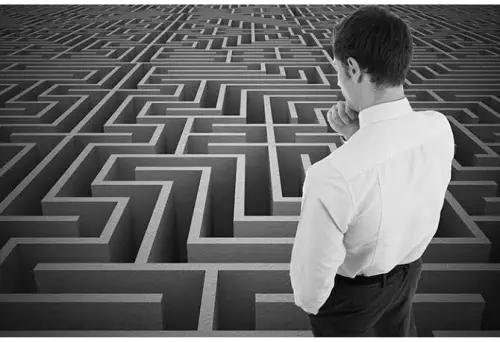
“The same problem does not necessarily give
every person the same information.”
i


© Normal-Model Framework - 2026


What if intelligence were measured
partly by what a person can receive,
not only by what they can produce?
Most assessments of intelligence present a person with information and score the response. Did they produce the correct answer? How many problems did they solve? How quickly? How complex was their reasoning? These outputs matter. But they emerge from an earlier process that may remain largely unexamined: What information was the person able to receive from the situation in the first place? Two people can encounter the same physical stimulus without receiving the same informational input. One may detect a relationship, anomaly or implication that never enters the other person’s active representation. The Normal-Model Framework suggests that this difference may deserve to be treated as part of intelligence—and may provide a new way to measure the impact of training.The same stimulus is not the same
input
An image, event, statement or problem may be physically available to several receivers. But availability does not guarantee reception. What becomes information depends partly upon the receiver: • what they already know; • what they expect; • what they can distinguish; • what they consider relevant; • what snags their attention; • what units they use; • what alternatives they can represent; and • what resources they are able or willing to allocate. The same stimulus may therefore produce different informational inputs. An expert may detect a faint but meaningful difference. A novice may not perceive it at all. Another receiver may notice many differences but be unable to distinguish signal from noise. Assessment that begins only with the final answer may miss these differences.Receptive intelligence
A possible working formulation is: Receptive intelligence is the capacity to detect, discriminate, integrate and learn from available information. This does not define intelligence as passive absorption. The receiver does not merely open a channel and allow information to enter. Reception may involve: • detecting differences; • separating signal from noise; • selecting what deserves attention; • constructing and comparing representations; • recognising missing information; • changing perspective or unit; • seeking further evidence; • calibrating confidence; and • revising a model when the evidence warrants it. The relevant question is not simply: How much input can a person receive? It is: How effectively can they convert available differences into useful information and appropriate model revision?The eye-test model
An eye test asks: Which is clearer: A, B, or are they the same? The person is not required to know which lens is objectively correct. They do not need to explain optics or produce a complex answer. Their simple response helps reveal something about the receiver: • whether they can detect a difference; • the direction in which clarity changes; • the point at which two states become indistinguishable; and • the resolution at which another adjustment no longer improves reception. The examiner changes one variable, compares the result and gradually approaches the receiver’s discrimination threshold. The output is not itself the capacity being measured. It is evidence about what the receiver can distinguish.From eyesight to information
A receptive-intelligence assessment might use a similar comparative structure. Instead of changing a lens, it could vary: • a detail in an image; • the strength of a signal; • the wording of an explanation; • the relevance of a piece of evidence; • the relationship between two events; • the reliability of a source; • the degree of uncertainty; • or the context surrounding a judgment. The receiver could be asked: • Same or different? • Different how? • Which is clearer? • Which better fits the evidence? • Which difference matters? • Has the new information improved the representation? • Is further investigation justified? • Are the two cases meaningfully different or merely superficially different? The difference could then be narrowed until the receiver’s present threshold becomes visible.Same at one resolution, different at
another
Two things can be the same at one resolution and different at a finer one. The eye-test response “the same” does not establish that two lenses are physically identical. It means: At my present resolution, for this comparison, I cannot detect a useful difference. The same principle may apply to meaning, risk, expertise and judgment. Two situations may be treated as equivalent until training makes a consequential difference visible. Alternatively, a person may detect a real difference that does not matter for the present purpose. This separates: • resolution: can the receiver detect the difference? • discrimination: is the difference meaningful here? • response: what, if anything, should be done about it? Conventional assessment can collapse all three into a single correct or incorrect answer.Beyond the final answer
Two people may produce the same correct answer through very different representations. One may understand the structure of the problem. Another may recognise a familiar surface pattern. A third may guess successfully. Likewise, an answer marked incorrect may contain evidence that the receiver noticed an important ambiguity, used a different but defensible unit or identified a problem in the question itself. A final answer compresses the path that produced it. If assessment records only the output, it may not distinguish: • understanding from successful imitation; • justified confidence from certainty without evidence; • insight from guessing; • rigid accuracy from adaptable judgment; • or a productive alternative representation from simple error.Possible dimensions
Resolution What is the smallest relevant difference the receiver can reliably detect? Discrimination Can the receiver distinguish meaningful differences from harmless variation or noise? Relevance Can the receiver identify which available signals matter for the present objective? Representation Can the receiver construct a coherent but revisable account from incomplete information? Perspective Can the receiver recognise that another unit, objective or viewpoint may produce a different representation? Information seeking Can the receiver identify what is missing and request the information most likely to improve the representation? Calibration Does expressed confidence correspond reasonably to the quality of the available evidence? Updating Can appropriate new evidence modify the model, or does the receiver merely defend the initial answer? Resource allocation Can the receiver decide which differences deserve further attention and when further investigation is no longer worth its cost? Transfer Can learning in one situation improve noticing and judgment in another? Measuring the impact of training The eye-test model may be particularly useful for measuring whether training has changed the receiver. Many training assessments ask whether the learner can reproduce information or select the expected answer. A more upstream question is: What can this person notice now that would previously have passed them by? Before training, carefully graded comparisons could establish the learner’s current threshold: • Which differences can they detect? • Which differences do they judge to matter? • Which normal variations do they correctly allow to pass? • How confident are they? • What do they choose to investigate? • What action threshold do they use? After training, new but equivalent examples could test whether those capacities have changed. The goal would not be merely to show that the learner remembers the training material. It would be to show that the learner now receives more useful information from an unfamiliar situation.A possible training-assessment
sequence
1. Baseline Establish the learner’s existing resolution, discrimination, confidence and response thresholds. 2. Training Develop the relevant model of normal through explanation, comparison, varied examples, boundary cases and feedback. 3. Novel comparison Test the same underlying distinction using material the learner has not previously seen. 4. Transfer Place the distinction in a different context to determine whether the learner can recognise its deeper structure. 5. Retention Repeat the assessment after time has passed. This sequence helps distinguish model development from answer memorisation.Measuring more than accuracy
Training may produce several different improvements: • detection of weaker relevant signals; • fewer missed signals; • fewer false alarms; • better distinction between meaningful and harmless variation; • better confidence calibration; • faster recognition; more useful follow-up questions; • more appropriate thresholds for action; • better transfer to unfamiliar situations; and • greater retention over time. A receiver-resolution profile could therefore be more informative than a single percentage score. It might show, for example: The learner now detects weaker relevant signals, distinguishes them more reliably from normal variation, asks better follow-up questions and retains that improvement in unfamiliar situations.Not maximum resolution - useful
resolution
The aim of training should not be to make a person notice everything. Maximum sensitivity may produce distraction, false alarms and unnecessary investigation. A learner who flags every case has not necessarily developed better discrimination. They may simply have learned that the assessment rewards concern. The objective is better calibrated reception: Notice differences that matter while continuing to let harmless variation pass. This reflects a broader NMF principle: Do not mistake maximum for optimum. The useful threshold depends upon the purpose, consequences, available resources and costs of both missing and falsely identifying a signal.Intelligence through the NMF
Detection: What was available, and what became active information for the receiver? Evaluation: Which differences were treated as signal, noise, uncertainty or missing evidence? Commitment When did the receiver decide that the representation was good enough? Was confidence appropriate to the evidence and stakes? Action: Did the receiver answer, investigate, ask, wait, test or revise? Was the response appropriate to the detected difference? Learning: How did feedback alter the model? Did the receiver extract a transferable distinction or merely memorise the expected response?The measurement problem
Reception cannot be observed directly. To assess what a person received, we must ask them to produce some form of output: a statement, selection, question, action, confidence rating or revised judgment. A receptive assessment therefore does not eliminate output. It changes the role of output. The response becomes a probe into what the receiver detected, distinguished and represented—not the whole definition of intelligence.A profile rather than a single score
Receptive intelligence may not be best represented by one number. A person may show: • high resolution but weak discrimination; • strong information seeking but low confidence; • rapid detection but premature commitment; • careful calibration but slow action; • excellent updating within one domain but weak transfer to another. A profile could reveal capacities that a single correct-answer score conceals. It might also identify where training should begin.Context and prior knowledge
What a person can receive depends partly upon what they already know. A domain expert may detect distinctions unavailable to a novice. Language, culture, experience, familiarity and purpose can all influence what becomes visible. Any proposed assessment would need to distinguish carefully between: • general receptive capacities; • learned domain expertise; • access to relevant background knowledge; • familiarity with the assessment format; and \ • differences in what the assessor regards as important. The assessment itself uses a model of normal. Its designers decide which signals count, which distinctions matter and which responses demonstrate improvement. Those judgments must also remain open to examination.Questions NMF can bring to
intelligence, assessment and training
1. What does the assessment currently reward? 2. Does it measure reception, production or both? 3. What relevant information was available? 4. What entered the receiver’s active representation? 5. What is the smallest meaningful difference they can detect? 6. Can they distinguish signal from harmless variation? 7. What unit are they using? 8. What information do they recognise as missing? 9. What do they choose to investigate? 10. Is confidence calibrated to evidence? 11. How does new evidence change the representation? 12. Did training change the receiver or teach the answer? 13. Does improvement transfer to unfamiliar situations? 14. Is the change retained over time? 15. Has greater sensitivity also produced more false alarms? 16. What forms of intelligence might the scoring model be unable to see?A potential use, not a validated
measure
The Normal-Model Framework does not yet provide a validated test of intelligence or training effectiveness. It does not establish that receptive intelligence is a single measurable capacity, nor does it replace psychometrics, cognitive science, educational assessment or established training evaluation. It offers a research proposition: Intelligence may be reflected not only in the answers a receiver can produce, but in the differences they can detect, the information they can extract and the quality with which they revise their representation. It also offers a practical training question: What can this person notice now that would previously have passed them by? Its potential contribution lies in moving assessment further upstream: • What became information for this receiver? • What meaningful difference could they detect? • Did training improve their resolution and discrimination? • And did that improvement change what they could do?
Intelligence & Assessment


“We usually measure the answer. What if we also
measured what the person was able to notice?.”
“The same problem does not necessarily give
every person the same information.”
i


