What makes something feel normal — until it doesn't?
You walk into a familiar room and something feels wrong. You hear a familiar voice and something sounds
different.
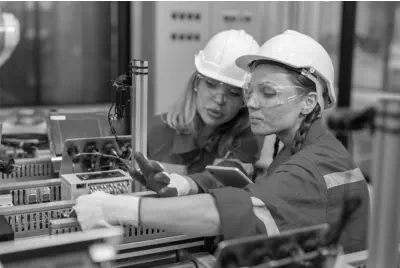
An experienced engineer hears a machine and says, “That doesn't sound right.” A pilot glances at an instrument
and something catches their attention.
What changed? Sometimes the answer is obvious. Sometimes you can't yet say. But to notice that something is
different, you need something for it to be different from. NMF calls that your model of normal.
You don't start from nothing
At any moment, you bring something with you. Experience. Expectations. Memories. Knowledge. Habits. Beliefs. Patterns you've encountered before. Together, these contribute to your current representation of what is normal. Not necessarily what is good. Not necessarily what is correct. Simply what, for this receiver, is sufficiently expected or familiar not to demand another look. Your model doesn't need to be conscious. You may only discover part of it when something doesn't fit. Sometimes difference reveals the normal you didn't know you were expecting.Difference relative to what?
Imagine hearing: That's unusual. Unusual relative to what? Or: She's tall. Compared with whom? Or: That's a good result. Using what measure? Difference isn't particularly informative without some idea of the comparison being made. The same applies to normal. What feels normal depends partly on the unit, ruler, timescale and perspective being used to make the comparison. Change the comparison and you may change the representation. So when something feels different, an interesting question is: Different from what?Same world. Different receivers.
Two people can encounter the same signal and notice different things. One hears nothing unusual. The other immediately looks up. One sees a routine situation. The other sees a warning sign. One sees a mistake. Another sees an opportunity. The difference needn't be in the signal. The receivers may have different models of normal. Their experience, expectations and resolution may make different differences available to them. This is why another person's perspective can be valuable. They may notice something you didn't. And you may notice something they didn't. Neither receiver necessarily has the complete representation.Expertise changes normal
Experience can make a model richer. An expert may have encountered thousands of examples from which to build increasingly fine distinctions. Where a novice sees: same the expert may see: same, same, same, slightly different. A sound. A movement. A word. A number. A hesitation. The difference may be tiny. But the expert has sufficient resolution for it to become available. This is one of the possibilities that interests NMF: • Can training change what we become capable of noticing? • Can we deliberately build richer models of normal so that useful differences that once passed us by become available? We think we can — at least to some degree.But expertise creates another problem
A well-developed model is useful precisely because you don't have to reconstruct everything from scratch every time. Familiar pathways become easier to use. Patterns become recognisable. Judgments can become faster. But there is a tension. The better developed a model becomes, the easier it may be to interpret new situations through that model. You may become extremely good at noticing differences within your existing representation while becoming less likely to question the representation itself. So expertise alone isn't enough. Build the model. But remain open to questioning the model. Sometimes the useful difference comes from the expert. Sometimes it comes from the beginner who asks: Why do you do it that way? Some things escape attention because they are too faint. Others escape attention because they are too familiar. A feature may be strong, pervasive and influential but remain outside deliberate attention because it forms part of what the receiver already treats as normal. It may become noticeable only when it changes, disappears, is contrasted with something else or is identified by another receiver. The most obvious thing may be the hardest thing to notice — because it is part of what makes everything else look normal.Deep normal
Some expectations are not merely familiar. They are foundational. Many other representations, comparisons and judgments depend upon them. Because these assumptions form part of the background against which everything else becomes intelligible, they may rarely become objects of attention themselves. If challenged, the immediate response may be: “Of course it’s right. It’s obviously right.” Their apparent obviousness does not prove that they are true. It may indicate how deeply they are embedded in the receiver’s current model of normal — and how much else would need to be reconsidered if they were reopened. Some things are difficult to notice not because they are peripheral, but because they are foundational. Once such an assumption becomes visible, the changed receiver may wonder how they ever failed to see it. But the obviousness belongs partly to the changed receiver.Normal isn't fixed
Your model of normal can change. • Something strange becomes familiar. Something once acceptable becomes unacceptable. • Something you couldn't distinguish becomes obvious. • Something that once caught your attention no longer does. • And occasionally something you've taken for granted for years suddenly looks completely different. The world may have changed. But the receiver may have changed too. Learning can change expectations. Experience can increase resolution. Another person's perspective can expose a difference. New evidence can give you reason to revise what you previously believed. And the changed receiver encounters what comes next with a changed model.When the environment changes
Sometimes the model that served you well yesterday becomes less useful today. Change the environment and you can change which differences matter. What once deserved considerable attention may now deserve little. Something previously unimportant may suddenly become consequential. So the receiver may need to reprioritise — reweighting what deserves limited resources under the new conditions. This can happen dramatically. But mostly it happens quietly, all the time. Your model of normal isn't simply a record of where you've been. It helps shape what becomes available to you next.Could we get better at this?
Perhaps the goal isn't to build the perfect model of normal. There isn't one model suitable for every receiver, purpose, environment and moment. Perhaps we can do something more modest: • Build richer models where greater resolution helps. • Notice when a useful difference becomes available. • Learn from other receivers who perceive differences we don't. • Recognise when the environment has changed. • And remain willing to revise a model that no longer seems good enough. Build the model. But remain open to questioning the model. That's enough.
Models of
Normal



“ Most of the time, we don’t notice what feels normal.
We notice when something no longer fits.”

“ What feels normal to you may feel
unusual to someone else. “


© Normal-Model Framework - 2026


What makes something feel normal —
until it doesn't?
You walk into a familiar room and something
feels wrong. You hear a familiar voice and
something sounds different.
An experienced engineer hears a machine
and says, “That doesn't sound right.” A pilot
glances at an instrument and something
catches their attention.
What changed? Sometimes the answer is
obvious. Sometimes you can't yet say. But
to notice that something is different, you
need something for it to be different from.
NMF calls that your model of normal.
You don't start from nothing
At any moment, you bring something with you. Experience. Expectations. Memories. Knowledge. Habits. Beliefs. Patterns you've encountered before. Together, these contribute to your current representation of what is normal. Not necessarily what is good. Not necessarily what is correct. Simply what, for this receiver, is sufficiently expected or familiar not to demand another look. Your model doesn't need to be conscious. You may only discover part of it when something doesn't fit. Sometimes difference reveals the normal you didn't know you were expecting.Difference relative to what?
Imagine hearing: That's unusual. Unusual relative to what? Or: She's tall. Compared with whom? Or: That's a good result. Using what measure? Difference isn't particularly informative without some idea of the comparison being made. The same applies to normal. What feels normal depends partly on the unit, ruler, timescale and perspective being used to make the comparison. Change the comparison and you may change the representation. So when something feels different, an interesting question is: Different from what?Same world. Different receivers.
Two people can encounter the same signal and notice different things. One hears nothing unusual. The other immediately looks up. One sees a routine situation. The other sees a warning sign. One sees a mistake. Another sees an opportunity. The difference needn't be in the signal. The receivers may have different models of normal. Their experience, expectations and resolution may make different differences available to them. This is why another person's perspective can be valuable. They may notice something you didn't. And you may notice something they didn't. Neither receiver necessarily has the complete representation.Expertise changes normal
Experience can make a model richer. An expert may have encountered thousands of examples from which to build increasingly fine distinctions. Where a novice sees: same the expert may see: same, same, same, slightly different. A sound. A movement. A word. A number. A hesitation. The difference may be tiny. But the expert has sufficient resolution for it to become available. This is one of the possibilities that interests NMF: • Can training change what we become capable of noticing? • Can we deliberately build richer models of normal so that useful differences that once passed us by become available? We think we can — at least to some degree.But expertise creates another problem
A well-developed model is useful precisely because you don't have to reconstruct everything from scratch every time. Familiar pathways become easier to use. Patterns become recognisable. Judgments can become faster. But there is a tension. The better developed a model becomes, the easier it may be to interpret new situations through that model. You may become extremely good at noticing differences within your existing representation while becoming less likely to question the representation itself. So expertise alone isn't enough. Build the model. But remain open to questioning the model. Sometimes the useful difference comes from the expert. Sometimes it comes from the beginner who asks: Why do you do it that way? Some things escape attention because they are too faint. Others escape attention because they are too familiar. A feature may be strong, pervasive and influential but remain outside deliberate attention because it forms part of what the receiver already treats as normal. It may become noticeable only when it changes, disappears, is contrasted with something else or is identified by another receiver. The most obvious thing may be the hardest thing to notice—because it is part of what makes everything else look normal.Deep normal
Some expectations are not merely familiar. They are foundational. Many other representations, comparisons and judgments depend upon them. Because these assumptions form part of the background against which everything else becomes intelligible, they may rarely become objects of attention themselves. If challenged, the immediate response may be: “Of course it’s right. It’s obviously right.” Their apparent obviousness does not prove that they are true. It may indicate how deeply they are embedded in the receiver’s current model of normal — and how much else would need to be reconsidered if they were reopened. Some things are difficult to notice not because they are peripheral, but because they are foundational. Once such an assumption becomes visible, the changed receiver may wonder how they ever failed to see it. But the obviousness belongs partly to the changed receiver.Normal isn't fixed
Your model of normal can change. • Something strange becomes familiar. Something once acceptable becomes unacceptable. • Something you couldn't distinguish becomes obvious. • Something that once caught your attention no longer does. • And occasionally something you've taken for granted for years suddenly looks completely different. The world may have changed. But the receiver may have changed too. Learning can change expectations. Experience can increase resolution. Another person's perspective can expose a difference. New evidence can give you reason to revise what you previously believed. And the changed receiver encounters what comes next with a changed model.When the environment changes
Sometimes the model that served you well yesterday becomes less useful today. Change the environment and you can change which differences matter. What once deserved considerable attention may now deserve little. Something previously unimportant may suddenly become consequential. So the receiver may need to reprioritise — reweighting what deserves limited resources under the new conditions. This can happen dramatically. But mostly it happens quietly, all the time. Your model of normal isn't simply a record of where you've been. It helps shape what becomes available to you next.Could we get better at this?
Perhaps the goal isn't to build the perfect model of normal. There isn't one model suitable for every receiver, purpose, environment and moment. Perhaps we can do something more modest: • Build richer models where greater resolution helps. • Notice when a useful difference becomes available. • Learn from other receivers who perceive differences we don't. • Recognise when the environment has changed. • And remain willing to revise a model that no longer seems good enough. Build the model. But remain open to questioning the model. That's enough.
Models of
Normal



“ What feels normal to you may feel
unusual to someone else. “
“ Most of the time, we don’t notice what feels normal.
We notice when something no longer fits.”


